


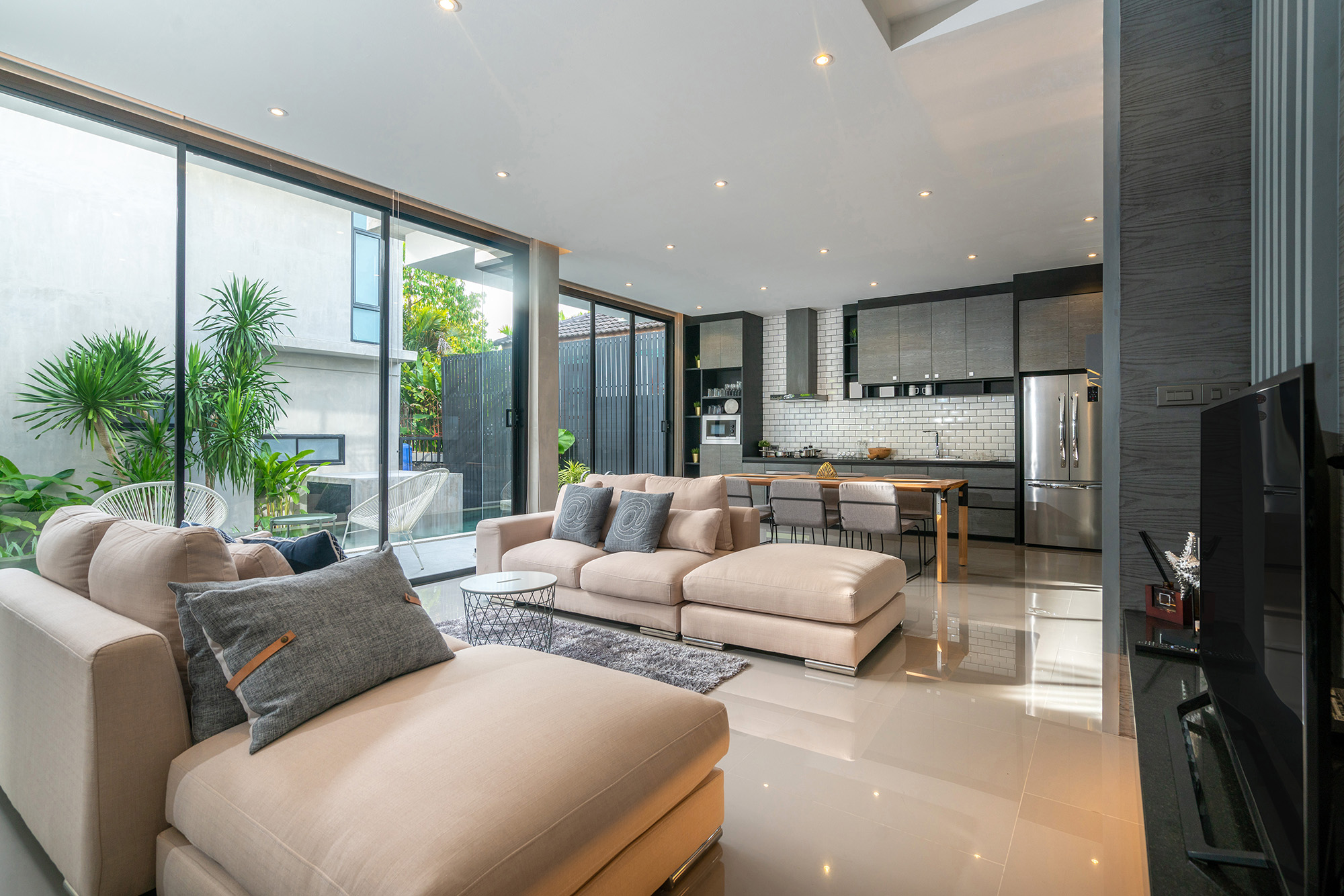
One of the quietest decisions in a tile project is which direction to run it, and it has a bigger effect on how a room feels than most people expect. There is no universal rule that tile must run the same way through every room, and following that assumption blindly can actually work against a space. The better approach is to let the room itself, its sightlines, its light, and its shape, decide the direction. Once you see tile that way, the choice gets both easier and smarter.
Why Direction Matters More With Tile Than People Think
Tile carries something most flooring does not, which is grout lines. Those lines create a strong, repeating visual grid, and the eye follows them whether you intend it to or not. Run them in the right direction and they guide a person naturally through the space, while the wrong direction can make a room feel choppy or subtly off in a way that is hard to name.
Because those lines are so visually powerful, direction becomes a design tool rather than an afterthought. The same tile can make a room feel longer, wider, or more balanced purely based on how it is oriented. That is why the direction question deserves real thought at the planning stage, long before the first tile is set.
Let Sightlines and Light Lead the Direction
The most reliable guide is the main sightline, meaning the direction the eye travels when you enter or stand in the room. Running tile and its grout lines along that primary line draws the eye through the space and makes it feel larger and more intentional. Where a room has a clear view or a long dimension, orienting the tile to follow it usually reads best.
Light is the second guide. Running tile toward the main source of natural light can make a floor feel more expansive and its surface more seamless. In a bright Wichita room with strong window light, working with that light rather than against it helps the whole floor feel calm and considered rather than accidental.
When to Carry It Through and When to Break
In an open floor plan where rooms share sightlines, carrying tile in the same direction throughout creates flow and makes the whole area feel like one continuous, larger space. Here consistency is usually the friend, and a shared direction keeps the openness from feeling broken up. This is where the same direction rule genuinely earns its reputation.
Separate rooms are a different story. Between distinct spaces, especially across a doorway or threshold, a deliberate change in direction can be perfectly right, as long as it looks intentional. One pro detail worth knowing is that where tile does carry through a doorway, aligning the grout lines across the threshold makes the transition feel seamless, while misaligned lines quietly signal a rushed job.
Rectangular and Plank Tile Change the Rule
Square tile is close to direction neutral, since a grid reads much the same whichever way it is turned, which gives more freedom. Rectangular and plank shaped tile are a different matter, because they carry a strong built in direction that has to be planned. Their length can be used to stretch a room along its short side or emphasise its length, depending on the goal.
Large format tile adds one more consideration, since its bigger pieces and longer lines make direction even more visible across a floor. The takeaway is simple. The shape of the tile decides how much direction matters, so the plan should always account for it rather than defaulting to one habit for every room.
At Designers Home Gallery, our design team helps Wichita homeowners plan tile direction around sightlines, light, and room shape so every floor feels intentional. We are located at 530 North Hydraulic Street, Wichita, KS 67214, and proudly serve Wichita, Derby, Andover, Maize, and Eastborough. Explore porcelain, ceramic, and large format tile in person at Wichita, KS, and when you want an expert eye on your layout, contact us and we will help you get the direction right.


