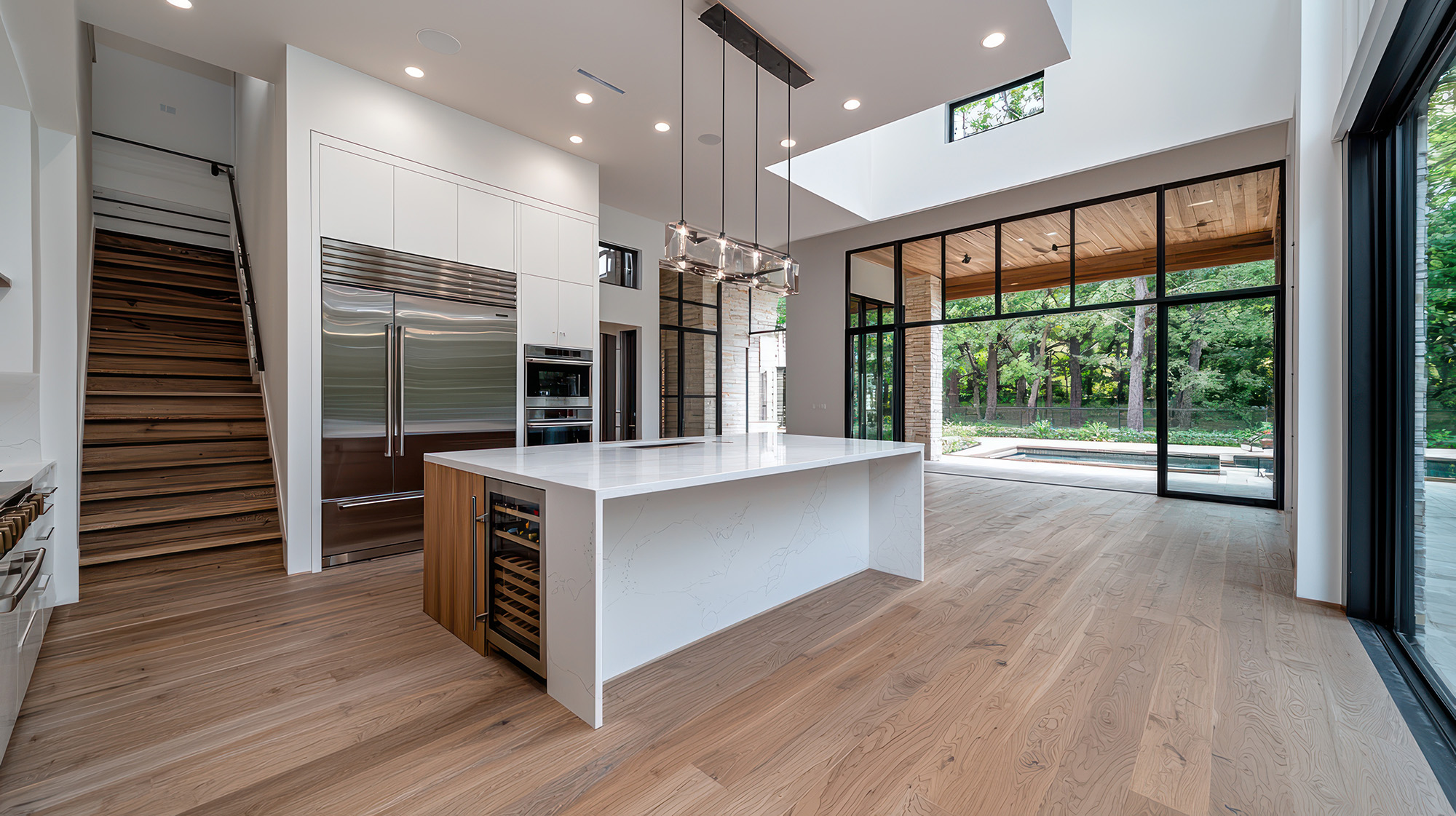
Wood flooring doesn’t just cover a surface—it directs how people move, feel, and focus inside a home. At Designers Home Gallery, serving clients through Wichita, KS, one of the most impactful yet misunderstood decisions we guide homeowners through is wood grain direction.
Grain orientation is a psychological design tool, not a preference—and when used correctly, it creates visual calm and spatial clarity.
Grain Direction and Human Perception
The human eye naturally follows linear patterns. Wood planks act like arrows, subtly guiding movement and attention.
When grain direction is poorly planned, homes can feel:
Narrower than they are
Visually restless
Disconnected between rooms
Correct grain orientation restores balance and flow.
The Rule Most People Get Wrong
The common advice is to “run planks the long way.” While often true, it’s incomplete.
What actually matters is:
Primary sightlines from entry points
Natural light direction
Connection between main living areas
Running grain parallel to the longest uninterrupted visual line reduces visual breaks and mental fatigue.
Entryways: First Impressions Matter
In Wichita homes, the entry sets emotional tone. Grain running into the home (not across it):
Creates a sense of welcome
Expands perceived depth
Prevents a boxed-in feeling
Cross-grain at the entry can subconsciously signal resistance or clutter.
Open-Concept Spaces and Emotional Calm
In open layouts, changing grain direction between rooms creates visual noise—even without walls.
A continuous grain direction:
Lowers cognitive load
Makes large spaces feel cohesive
Supports relaxation and focus
This is especially important in homes used for both living and working.
Natural Light and Grain Interaction
Light amplifies grain movement. When sunlight runs perpendicular to plank direction, grain contrast increases—sometimes too much.
Strategic grain alignment with window orientation:
Softens contrast
Reduces glare
Creates a calmer visual field
This is critical with wide-plank hardwood and pronounced grain species.
Hallways and Transitions
Hallways should extend space, not compress it. Grain running lengthwise:
Visually elongates the corridor
Improves wayfinding
Reduces tunnel effect
Turning planks sideways in hallways often makes them feel tighter and more rigid.
Emotional Impact Over Time
Poor grain direction causes subtle stress. Homeowners often say:
“Something feels off”
“The space feels busy”
“I can’t relax here”
These reactions aren’t about color or finish—they’re about visual flow.
Final Thoughts from a Designer
Grain direction is invisible when done right—and impossible to ignore when done wrong. It’s one of the simplest ways to improve how a home feels without changing square footage.
If you’re installing hardwood in Wichita, Derby, Andover, Maize, and Eastborough, visit or call Designers Home Gallery. Our designers plan grain direction intentionally—so your floors support calm, clarity, and everyday comfort.